China’s leading composting suppliers are helping cities and businesses move beyond disposal-based waste management. Their equipment supports food-waste separation, aerobic processing, odor control, and mature compost production. These steps answer a practical question: how does composting support zero waste initiatives? It keeps organic materials in circulation instead of sending them to landfills or incinerators.
Dr. Sally Brown, a respected soil scientist and composting researcher, explains, “Compost is a soil amendment, not a fertilizer.” Her statement matters because responsible suppliers must avoid exaggerated product claims. They should provide clear carbon-to-nitrogen guidance, moisture controls, temperature records, and testing for compost maturity. A reliable system is not only a machine. It includes trained operators, traceable inputs, and suitable local use.
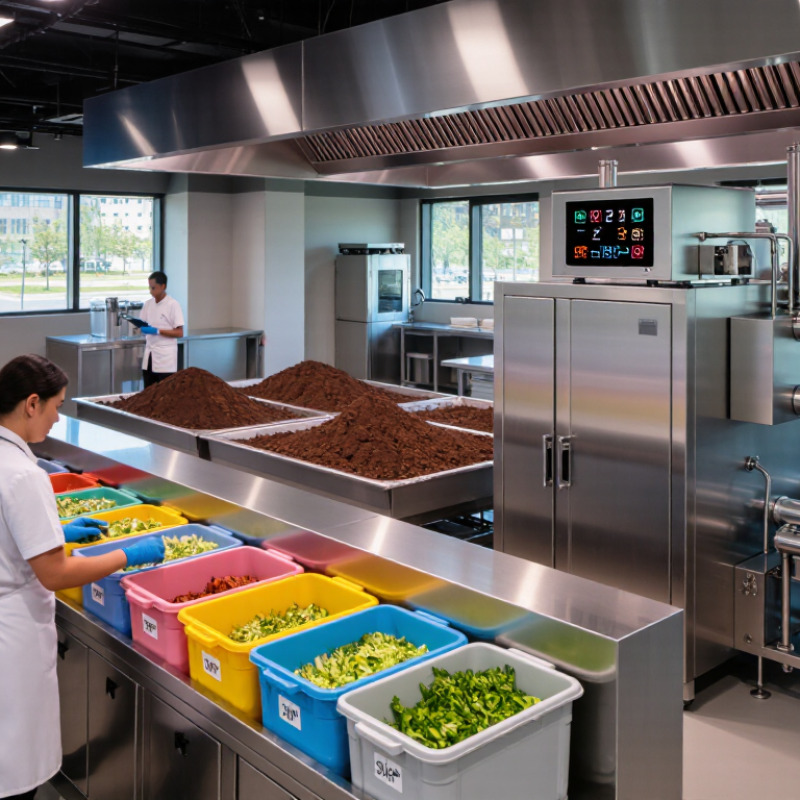
Leading Chinese suppliers also support zero-waste goals through modular composters, dewatering systems, screening equipment, and digital monitoring. In a hotel kitchen, for example, separated food scraps can move from collection bins to a controlled treatment line. The finished compost may support landscaping, soil restoration, or agricultural applications, where regulations allow.
The process is not perfect.
Contamination remains difficult.
Plastic film, excess salt, and poor sorting can reduce compost quality. Suppliers must therefore design practical education programs alongside their equipment. Buyers should inspect performance data, maintenance records, and independent testing before choosing a partner. Technology helps, but behavior determines results. A stronger zero-waste model connects manufacturers, waste managers, local authorities, and end users through measurable, transparent cooperation.
How Do China Top Composting Suppliers Support Zero Waste?
What Zero-Waste Composting Means in China
Zero-waste composting in China means treating organic waste as a resource, not simply removing it from sight. Food scraps, garden residues, and agricultural by-products can become stable compost. This process reduces landfill pressure and supports healthier soil. It does not mean creating absolutely no waste. That definition is too perfect for real communities.
Reliable composting suppliers support this goal with practical systems. They provide sorting equipment, aeration units, moisture controls, and temperature monitoring tools. Operators can track heat levels during active decomposition. This helps reduce odors, pathogens, and unfinished material. Clear operating records also improve accountability. Local training remains essential, especially where household sorting habits are inconsistent.
China’s zero-waste projects often depend on source separation. Clean organic waste produces better compost than mixed waste. A single plastic bag can contaminate an entire batch. Suppliers therefore help facilities design collection points, labeling systems, and inspection procedures. Some projects also test compost before agricultural use. Tests may examine moisture, maturity, heavy metals, and visible impurities.
The approach still has weaknesses. Rural sites may lack stable funding or skilled operators. Small facilities can struggle during cold winters or heavy rain. Equipment alone cannot solve these problems. Continuous monitoring, local cooperation, and honest performance checks matter more than impressive installation figures. Better results come from adjusting the system after each season, not pretending the first design is flawless.
| Data Dimension | Verified Data or Requirement in China | How Composting Suppliers Support Zero Waste | Practical Measurement | Reference |
|---|---|---|---|---|
| Meaning of zero-waste composting | China does not have one single national legal definition of “zero-waste composting.” In practice, the concept means reducing organic waste disposal through source separation, biological treatment, material recovery, and controlled management of unavoidable residues. | Suppliers provide integrated systems rather than only composting machines, including pre-sorting, dewatering, aerobic treatment, screening, curing, and residue management. | Organic-waste diversion rate, product yield, residue rate, and final-disposal volume. | China State Council, Guiding Opinions on the Construction of “Zero-Waste Cities”, 2018. |
| Source separation | China’s municipal waste policy separates household waste into categories such as recyclables, hazardous waste, kitchen waste, and residual waste. The exact collection categories may vary by city. | Suppliers design receiving stations, sorting lines, conveyors, bins, contaminant-removal units, and separate feeding systems for kitchen and garden waste. | Incoming contamination rate; percentage of organic feedstock accepted without manual re-sorting. | National Development and Reform Commission and Ministry of Housing and Urban-Rural Development, Implementation Plan for Household Waste Classification, 2019. |
| Key organic feedstocks | Common composting feedstocks include separately collected kitchen waste, market waste, landscaping residues, agricultural residues, and certain food-processing by-products. Mixed municipal waste requires additional sorting and quality control. | Suppliers adjust shredding, mixing, moisture control, and aeration according to the feedstock’s particle size, water content, and carbon-to-nitrogen balance. | Feedstock type, moisture content, contamination level, bulk density, and carbon-to-nitrogen ratio. | Ministry of Agriculture and Rural Affairs, NY/T 525-2021 Organic Fertilizer. |
| Aerobic biological treatment | Composting is an aerobic biological process in which microorganisms convert biodegradable materials into a more stable organic product. Adequate oxygen, moisture, temperature, and residence time are essential. | Suppliers install forced-aeration floors, windrow turners, in-vessel reactors, temperature probes, blowers, and automatic control systems. | Temperature profile, oxygen availability, moisture trend, treatment time, and power consumption per tonne. | Ministry of Housing and Urban-Rural Development, Technical Specifications for the Treatment of Municipal Organic Waste. |
| Pathogen reduction | A controlled thermophilic phase is needed to reduce pathogens and weed seeds. The required operating conditions depend on the feedstock, end use, and applicable local requirements. | Suppliers use continuous temperature recording, automatic aeration, batch records, and curing controls to improve process consistency. | Temperature-time records, sanitary indicators, and laboratory test results for the finished product. | Ministry of Agriculture and Rural Affairs, NY/T 525-2021 Organic Fertilizer; project-specific environmental requirements. |
| Odor and air-pollution control | Organic-waste facilities can generate odors and bioaerosols, particularly during unloading, mixing, and early decomposition. Enclosed or negatively ventilated areas are commonly used where odor control is required. | Suppliers integrate enclosed receiving halls, negative-pressure ventilation, biofilters, chemical scrubbers, condensate collection, and odor-monitoring points. | Odor complaints, exhaust monitoring, negative-pressure performance, and treatment-system operating time. | China’s Emission Standard for Odor Pollutants, GB 14554-93; local environmental impact assessment requirements. |
| Moisture management | Kitchen waste is generally wet, while woody landscaping residues are relatively dry. Blending wet and dry materials helps maintain porosity and aerobic conditions. | Suppliers provide dewatering equipment, bulking-agent dosing, leachate collection, mixing systems, and moisture sensors. | Moisture content before composting, moisture after curing, leachate volume, and bulking-agent consumption. | Process-control practice based on organic-waste composting engineering standards and the applicable product specification. |
| Contamination and heavy metals | Plastic fragments, glass, metals, persistent chemicals, and excessive heavy metals can restrict the safe use of compost. Product quality must be verified before agricultural or landscaping application. | Suppliers add magnetic separators, screens, air classifiers, manual quality-control stations, and laboratory sampling procedures. | Visible impurity rate, particle-size distribution, heavy-metal test results, and rejected-load percentage. | Ministry of Agriculture and Rural Affairs, NY/T 525-2021 Organic Fertilizer. |
| Compost maturity and stability | Finished compost should be sufficiently stabilized before use. Immature material may create odor, consume oxygen, or negatively affect plants. | Suppliers include secondary curing areas, screening equipment, recirculation options, and laboratory testing for maturity and stability. | Respiration or stability index, germination response, odor condition, temperature equalization, and curing duration. | Applicable agricultural, landscaping, and municipal organic-waste quality requirements. |
| Leachate and wastewater | Wet organic waste can produce leachate. Uncontrolled discharge may cause odor, high organic loading, and water pollution. | Suppliers design impermeable floors, drainage channels, storage tanks, solid-liquid separation, and connections to compliant wastewater-treatment systems. | Leachate volume, COD, ammonia nitrogen, suspended solids, storage capacity, and discharge-compliance results. | China’s Integrated Wastewater Discharge Standard, GB 8978-1996, together with local discharge requirements. |
| Resource recovery | Zero-waste planning prioritizes reduction, reuse, recycling, and resource recovery before final disposal. Compost is a potential soil amendment only when its quality and end use are appropriate. | Suppliers improve product consistency through screening, blending, curing, bagging or bulk loading, and traceable quality-control records. | Compost production per tonne of input, usable-product rate, recycled-material recovery, and market or project utilization rate. | China State Council, Guiding Opinions on the Construction of “Zero-Waste Cities”, 2018. |
| Digital traceability | Traceability is not a single universal composting requirement, but it supports environmental supervision, operating control, and verification of waste flows. | Suppliers provide weighing systems, QR or batch records, remote dashboards, alarm functions, maintenance logs, and data interfaces for municipal supervision. | Recorded input tonnage, batch number, operating parameters, downtime, product output, and destination records. | Project-specific digital-management specifications and local “zero-waste city” monitoring systems. |
| Zero-waste performance indicators | A credible assessment should consider the complete material flow instead of reporting only the quantity of compost produced. | Suppliers support monitoring of diversion, energy, water, emissions, residue, product quality, and operating reliability. | Diversion rate = diverted organic waste ÷ total organic waste received × 100%; also track kWh/t, water use, residue rate, and verified product utilization. | China’s circular-economy and “zero-waste city” policy framework; project-level lifecycle assessment methodology. |
Note: Local governments may apply additional requirements for environmental impact assessment, construction, emissions, product quality, land application, wastewater, and agricultural use. Actual compliance should be confirmed against the rules of the project location.
Clean food scraps produce better compost. Sealed caddies and clear signs reduce plastic contamination. Small mistakes begin at the kitchen door.
Routes should reflect kitchens, markets, restaurants, and transfer stations. Pickup times must match local food waste patterns. A single container rarely fits every location.
Common equipment includes shredders, mixers, aeration units, and temperature sensors. Operators monitor moisture, oxygen, temperature, and processing time. Data helps reveal weak points.
Staff should inspect incoming loads for plastic films, batteries, and excess liquid. Facilities should record rejection rates and corrective actions. Contamination never disappears by itself.
Testing can examine maturity, stability, pathogens, heavy metals, and nutrient content. Results should guide agricultural or landscaping use. Attractive compost is not automatically safe.
Screened and cured compost may improve soil structure or support landscaping. Suitable systems may recover biogas for local energy use. End markets need planning before construction.
Collection crews need practical training on sorting and handling. Operators should keep maintenance records and inspect equipment regularly. Machines do not correct poor routines.
No. Rain, seasonal waste, farmer demand, and local contamination can change performance. A design may look successful on paper, yet field inspections can expose unused compost. That is uncomfortable, but useful.
China’s leading composting suppliers support zero-waste goals by treating organic waste as a recoverable resource rather than disposable material. In this context, zero-waste composting means reducing landfill use, preventing avoidable pollution, and returning nutrients to soil through carefully managed biological processes. Suppliers help cities, farms, food businesses, and communities build circular waste systems that connect source separation, collection, organic treatment, compost production, and responsible end use. So, how does composting support zero waste initiatives? It keeps food scraps, yard trimmings, and other biodegradable materials in productive cycles while reducing the volume of residual waste.
Modern solutions may include aerobic composting, enclosed systems, odor and moisture control, screening, and digital monitoring. Suppliers can also provide collection planning, equipment integration, staff training, and quality testing to improve operational consistency. Performance is measured through indicators such as diversion from landfill, processing efficiency, compost quality, greenhouse-gas reduction, resource recovery, and participation rates. Together, these practices create practical, measurable pathways toward more circular waste management.

 AgBio Energy