Managing organic waste at scale is a practical challenge for farms, food processors, markets, hotels, and municipal facilities. A small compost bin cannot handle truckloads of wet food scraps, crop residues, or animal manure. Scale changes everything. Moisture, odor, contamination, transport distance, and available land can quickly affect operating costs. This guide examines China’s top 10 organic waste solutions for large volumes, with attention to performance, maintenance, and measurable environmental benefits.
The central question is how to handle large volumes of organic waste effectively without creating new problems. Options may include industrial composting, anaerobic digestion, black soldier fly processing, biogas recovery, dehydration, and organic waste separation systems. Each method has different requirements. A food factory may need rapid odor control and reliable dewatering. A farm may prioritize nutrient recovery and affordable equipment. A city may require continuous processing, enclosed operations, and strict monitoring.
Real sites are messier. Waste composition changes daily. Plastic packaging may enter a food-waste line, while heavy rain can dilute agricultural residues. Good planning must account for these details instead of relying on ideal conditions. Technical specifications, operator experience, maintenance records, and verified output quality all matter. Some solutions appear efficient but perform poorly when feedstock is inconsistent. That deserves honest attention. The most suitable system is rarely the most impressive one; it is the option that fits local volumes, climate, labor, budget, and end-use markets. This overview provides a practical starting point for comparing solutions with greater confidence.
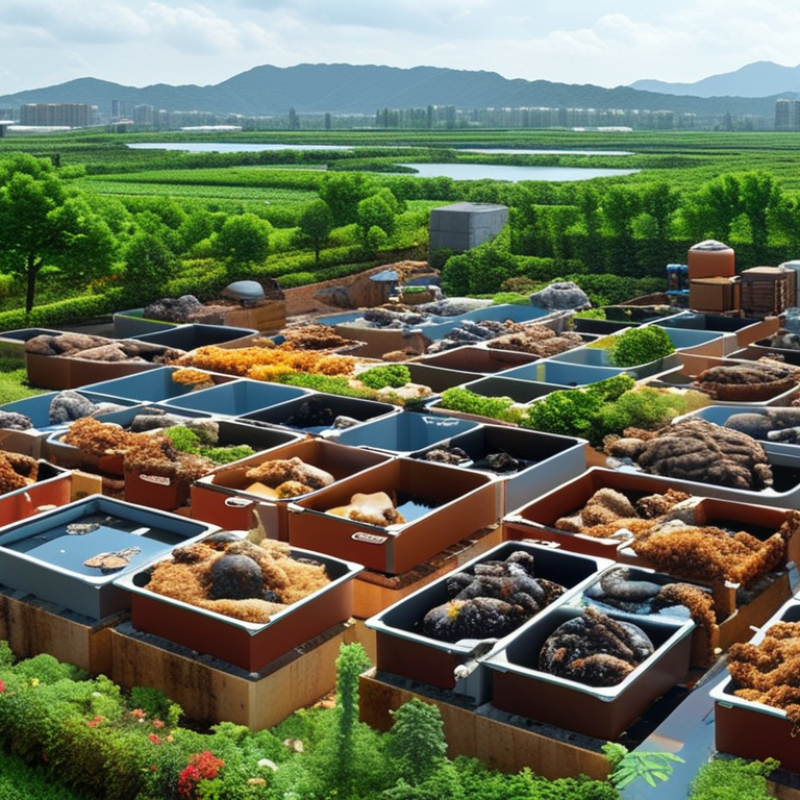
Organic Waste Management in China: Scope and Evaluation Criteria
China Top 10 Organic Waste Solutions for Large Volumes
Organic waste management in China must begin with scope, not equipment. The China Urban-Rural Construction Statistical Yearbook reported over 250 million tonnes of urban household waste collected in 2023. Food scraps, market residues, sludge, and agricultural by-products form different operating streams. Their moisture, salt, oil, and contamination levels can change daily. That detail matters.
Evaluation should cover six practical areas: source separation, capacity, water balance, energy recovery, residue quality, and emissions control. The 2024 UNEP Food Waste Index estimated 1.05 billion tonnes of food waste globally in 2022. China’s large cities therefore need systems that manage peaks, not only annual averages. Anaerobic digestion may suit wet, separated food waste. Composting can fit cleaner green residues. Thermal treatment is less suitable when feedstock remains excessively wet. No single route wins.
Reliable assessment also requires site-level evidence. Measure tonnes per day, volatile solids, contamination rate, methane yield, odor complaints, and digestate use. Compare at least twelve months of data where possible. A laboratory sample is not enough. Collection vehicles may deliver plastic film, chopsticks, or excess wash water. That assumption is often wrong. Publicly reported results should state sampling methods, operating hours, downtime, and final-residue destinations. China’s local climate, land availability, and permitting conditions can shift the preferred solution. A cheaper facility may perform poorly if separation discipline is weak. Industry decisions need measured performance, not attractive capacity figures.
China’s Top Ten Solutions for Managing Large Organic Waste Volumes
China’s Top Ten Solutions for Managing Large Organic Waste Volumes
China’s large organic waste streams need systems, not isolated machines. The World Bank’s What a Waste 2.0 report estimates that organic materials represent about 44% of global municipal solid waste. The UNEP Food Waste Index 2024 also estimates 1.05 billion tonnes of food were wasted worldwide in 2022.
Practical planning can combine ten routes: source separation, digital weighing, contaminant screening, dewatering, anaerobic digestion, co-digestion, aerobic composting, in-vessel composting, insect-based bioconversion, and landfill-gas recovery. Separate collection protects digestate quality. Dewatering reduces transport weight. Anaerobic digestion produces biogas, while controlled composting supports soil improvement. Co-digestion can balance moisture and nutrient levels. In-vessel systems help manage odor near dense communities. Insect-based processing may suit selected food residues, but feed safety and regulatory controls remain essential. Landfill-gas recovery is useful where disposal already exists, though it should not replace prevention.
The difficult part is not the digester. It is daily contamination control. A 2023 International Solid Waste Association report emphasizes that reliable collection and material quality determine treatment performance. Facilities should record moisture, plastics, salt, methane yield, energy use, and final-product quality. China’s municipal conditions vary sharply between coastal cities, inland counties, and rural areas. One design cannot fit all. A high-throughput plant may still underperform when separated waste arrives irregularly. That uncomfortable lesson deserves more attention.
Applications Across Agricultural, Food, and Municipal Waste Streams
China Top 10 Organic Waste Solutions for Large Volumes
Large organic waste streams need different treatment paths. Agricultural sites can use windrow composting, aerated static piles, vermicomposting, or biochar production. These methods handle manure, crop residues, and spoiled feed. Moisture should stay balanced, while carbon-rich materials reduce odors. Poor mixing remains a common weakness.
Food processors often need enclosed composting, anaerobic digestion, dewatering, or co-digestion. These systems can process vegetable trimmings, expired food, and wastewater solids. Digesters produce biogas and nutrient-rich digestate when temperatures and loading rates remain stable. Food waste changes quickly. A recipe that works today may fail after a seasonal supply shift.
Municipal programs benefit from source separation, in-vessel composting, and organic waste transfer stations. Separate collection limits plastic contamination and improves the value of finished compost. Operators should track moisture, contamination, temperature, retention time, and pathogen indicators. Local permits and agricultural standards also matter. Small pilot tests are wiser than confident promises. In my experience, equipment alone cannot fix weak collection habits. Some facilities still underestimate truck traffic, storage space, and odor complaints. Those practical details deserve attention before a large-volume system is built.
Technology Selection, Capacity Planning, and Regulatory Requirements
China Top 10 Organic Waste Solutions for Large Volumes
Technology Selection, Capacity Planning, and Regulatory Requirements
Large-volume organic waste needs more than a large machine. The feedstock decides. Food waste may suit anaerobic digestion, while garden waste often performs better in aerobic composting. Dewatering, pulping, fermentation, and insect-based processing can serve specific streams. Mixed waste creates trouble. It increases contamination, maintenance, and disposal costs. A practical assessment should measure moisture, impurities, seasonal variation, and daily tonnage for at least several weeks.
Capacity planning must include peaks, downtime, and future collection growth. Design around average volume alone is risky. A plant receiving 100 tonnes daily may need significantly higher buffer capacity. Storage areas should prevent leakage, rainwater entry, and uncontrolled odors. Operators should also calculate biogas output, digestate quality, compost maturity, electricity demand, and emergency bypass arrangements. Spreadsheet estimates can look precise. They are not field proof. Pilot testing remains valuable.
Regulatory requirements affect the design from the beginning. Projects in China may require environmental impact assessment, pollutant discharge permits, construction acceptance procedures, and compliance with local waste-sorting rules. Permits matter. Facilities should control odor, wastewater, methane, noise, dust, and fire risks. Digestate and compost require documented quality testing before agricultural or other approved use. Records should track incoming waste, treatment results, emissions, and residue movement. Local requirements can differ. Early consultation with environmental and agricultural authorities reduces redesign risk, although it never removes operational responsibility.
Cost, Environmental Impact, and Implementation Comparison
China’s large-volume organic waste sector needs more than one treatment route. The practical choice depends on moisture, contamination, land, and energy access. Ten common solutions include anaerobic digestion, composting, aerobic fermentation, insect bioconversion, feed recovery, biochar production, sewage co-digestion, landfill gas recovery, thermal drying, and integrated treatment parks.
Anaerobic digestion often offers strong environmental value for wet food waste. It can produce biogas while reducing uncontrolled methane release. Capital costs remain high because tanks, gas cleaning, and odor controls require skilled operation. Composting usually costs less, especially for separated garden waste. However, it needs land, careful moisture control, and stable markets for compost. Thermal drying works quickly, but its energy demand can weaken both cost savings and carbon performance. Landfill gas recovery is easier to add at existing sites, although it treats waste after disposal rather than preventing it.
Insect conversion can reduce organic volume and create protein-rich material, but feed safety controls and market acceptance remain important. Biochar systems may store carbon, yet feedstock drying can be expensive. Integrated parks improve logistics by combining digestion, composting, and wastewater treatment. They also create complicated management interfaces. Implementation should begin with a measured waste audit, not optimistic estimates. A city handling 300 tonnes daily may still fail if plastic contamination exceeds design limits. Real operating data often changes the preferred solution. Small trials expose odor, staffing, and maintenance problems before full investment. No option wins everywhere.
China Top 10 Organic Waste Solutions for Large Volumes: Cost, Environmental Impact, and Implementation Comparison
Indicative planning-level comparison for treating one tonne of wet organic waste. Costs are estimated 2024 USD per tonne, while environmental impact represents potential greenhouse-gas emissions avoided compared with uncontrolled disposal. Actual performance depends on feedstock composition, moisture, contamination, energy mix, collection system, and local regulations.
| Solution |
Implementation Readiness
1–5 |
Typical Large-Volume Use |
| Windrow composting | 5 | Green waste, food waste, agricultural residues |
| Aerated static pile composting | 4 | Mixed source-separated organics |
| Anaerobic digestion | 4 | High-moisture food waste, manure, wastewater solids |
| In-vessel composting | 4 | Urban sites with limited land availability |
| Black soldier fly bioconversion | 3 | Pre-consumer food waste and suitable agricultural by-products |
| Vermicomposting | 3 | Stable, screened organic materials |
| Thermal hydrolysis and digestion | 3 | Large wastewater-sludge and high-throughput facilities |
| Pyrolysis and biochar production | 3 | Dry agricultural residues and woody biomass |
| Hydrothermal carbonization | 2 | Wet biomass that is difficult to dry economically |
| Solid-state fermentation | 2 | Selected agricultural and food-processing residues |
Lower cost and higher avoided emissions are generally preferable. Composting provides the lowest-cost route for many clean organic streams, while anaerobic digestion and thermochemical processes can deliver higher environmental benefits but usually require greater capital, process control, and feedstock preparation.
FAQS
: Food scraps, market residues, sludge, garden waste, and farm by-products behave differently. Moisture, salt, oil, and contamination can change daily. One method rarely fits every stream.
Anaerobic digestion may suit separated, wet food waste. It can produce biogas and digestate. Plastic film, chopsticks, and wash water can reduce performance. Separation matters greatly.
Composting often fits cleaner garden and green residues. The material should contain limited plastic and other impurities. Finished compost needs maturity and quality testing before approved use. It can still fail.
Mixed waste increases contamination, maintenance, and disposal costs. It may also reduce product quality and equipment reliability. Operators should measure impurities before selecting equipment.
Planning should include daily peaks, downtime, storage needs, and future collection growth. A plant receiving 100 tonnes daily may need extra buffer capacity. Average volume is not enough.
They should measure daily tonnage, moisture, volatile solids, contamination, methane yield, and seasonal changes. Odor complaints, operating hours, downtime, and residue destinations also matter. Laboratory samples alone are insufficient.
Local climate, available land, transport distance, collection habits, and permitting requirements can change the decision. A cheaper facility may perform poorly when source separation is weak. That is easy to underestimate.
Facilities should manage odor, wastewater, methane, noise, dust, leakage, and fire risks. Storage areas should prevent rainwater entry and uncontrolled odors. Emergency bypass arrangements are also useful.
Projects may require environmental assessment, discharge permits, construction acceptance, and compliance with local sorting rules. Records should track incoming waste, treatment results, emissions, and residue movement. Local requirements can differ.
At least twelve months of data can reveal seasonal changes and recurring failures. Reported results should explain sampling methods and downtime. Capacity figures alone can look impressive, but they may mislead.
Conclusion
China’s growing agricultural, food-processing, and municipal waste streams require practical systems for reducing volume, recovering resources, and controlling environmental risks. This overview examines how to handle large volumes of organic waste effectively by comparing ten major approaches, including composting, anaerobic digestion, aerobic treatment, feed recovery, biochar production, and integrated waste-to-resource systems. The evaluation focuses on processing capacity, feedstock suitability, moisture management, energy recovery, odor control, operational complexity, and the quality of resulting products.
It also explains how different solutions can be applied across farms, food facilities, markets, and cities. Careful technology selection should consider waste composition, seasonal fluctuations, available land, transportation distances, utility needs, and local regulatory requirements. Capacity planning, monitoring, and safety procedures are essential for reliable operation. Finally, the comparison considers investment and operating costs, greenhouse-gas reduction, water and soil benefits, residual disposal, and implementation challenges, helping organizations select scalable organic waste management strategies that balance economic performance with long-term environmental responsibility.

 AgBio Energy