Organic waste recycling is moving beyond backyard compost bins and municipal collection trucks. Today, cities are testing anaerobic digestion, smart collection systems, food-waste prevention, and biochar production. These changes respond to a serious global problem. The World Bank’s What a Waste 2.0 report estimates that food and green waste represent about 44% of global municipal solid waste. Much of it still enters landfills, where oxygen-free conditions can generate methane.
The scale is becoming clearer. UNEP’s Food Waste Index Report 2024 estimates that 1.05 billion tonnes of food were wasted in 2022. Households produced about 60% of that waste. Food service generated 28%, while retail accounted for 12%. These figures help explain why source separation is becoming a major industry priority. Clean food scraps can support compost quality, renewable biogas, and soil improvement. Contaminated loads cannot.
So, what are the latest trends in organic waste recycling? Leading programs now combine separate collection with anaerobic digestion and data-based route planning. Some facilities use optical sorting, moisture sensors, and digital tracking to reduce contamination. The European Biogas Association also highlights biomethane as a growing pathway for recovering energy from organic materials. Yet, the picture is not perfect. Reporting methods differ between countries, and local infrastructure remains uneven. A modern facility can still fail when residents receive unclear instructions. This guide examines the evidence, practical technologies, and operational lessons shaping organic waste recycling. It also questions which solutions genuinely reduce emissions, rather than simply moving waste somewhere else.
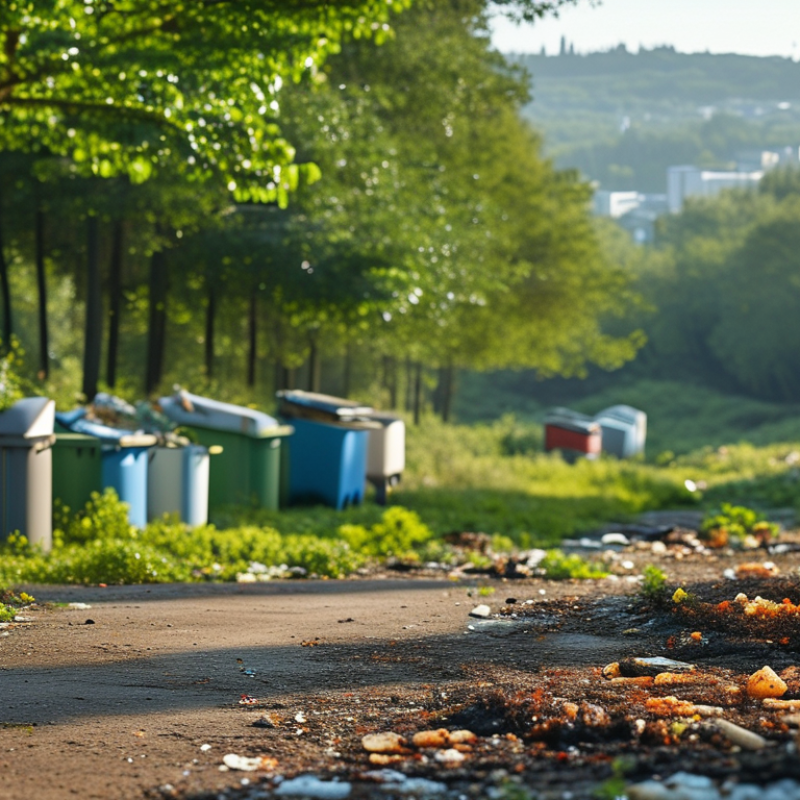
How to Track the Latest Trends in Organic Waste Recycling?
Defining Organic Waste Recycling and Its Role in a Circular Economy
Organic waste recycling converts food scraps, garden trimmings, and other biodegradable materials into useful outputs. These include compost, biogas, soil amendments, and recovered nutrients. The World Bank’s What a Waste 2.0 report estimates that organic materials represent about 44% of global municipal solid waste. That figure makes collection quality crucial.
The UNEP Food Waste Index Report 2024 estimated 1.05 billion tonnes of food waste in 2022. Households generated 60% of it. This reveals a practical trend: recycling systems must track waste prevention, not only treatment volumes. We should measure kilograms collected, contamination rates, methane avoided, and final product quality. Small details matter. A wet bin, plastic film, or missed collection can weaken an otherwise efficient process.
Anaerobic digestion and decentralized composting are expanding in many regions. The International Energy Agency reports that waste contributes roughly 20% of human-caused methane emissions. Diverting organic waste from landfills can therefore support climate goals, when facilities control leaks and manage digestate responsibly. However, I would not treat every recycling statistic as proof of circularity. Some programs report material processed, while ignoring soil benefits or transport emissions. Better tracking combines government datasets, facility records, field inspections, and transparent environmental reporting. The system is improving, but measurement remains imperfect.
Key global indicators for monitoring organic waste recycling, resource recovery, and circular-economy progress
| Data Dimension | Definition or Scope | Latest Verified Benchmark | Reference Year | Why It Matters for the Circular Economy | Primary Source |
|---|---|---|---|---|---|
| Organic Waste Recycling | The collection and biological or material processing of biodegradable waste, including food scraps, garden waste, agricultural residues, and other organic materials. | Organic waste is generally managed through composting, anaerobic digestion, animal-feed recovery, soil application, or controlled biological treatment. | Current practice | It converts discarded biomass into compost, biogas, digestate, nutrients, and renewable energy instead of sending it to landfill or incineration. | European Environment Agency; United Nations Environment Programme |
| Global Municipal Solid Waste | Total municipal solid waste generated by households, institutions, and commercial activities. | Approximately 2.24 billion tonnes of municipal solid waste were generated globally. | 2020 | This provides the baseline for estimating the scale of organic waste collection, treatment, and diversion requirements. | World Bank, What a Waste 2.0 |
| Organic Share of Municipal Waste | Biodegradable materials, mainly food and green waste, as a proportion of municipal solid waste. | Organic materials account for approximately 44% of global municipal solid waste. | 2018 estimate | A high organic fraction indicates substantial potential for composting, anaerobic digestion, source separation, and methane reduction. | World Bank, What a Waste 2.0 |
| Global Food Waste | Food removed from the food supply chain at the household, food-service, and retail stages. | About 1.05 billion tonnes of food waste were generated, with approximately 60% occurring at the household level, 28% in food service, and 12% in retail. | 2022 | Food-waste prevention should come first, followed by redistribution, animal-feed use where appropriate, composting, and anaerobic digestion. | United Nations Environment Programme, Food Waste Index Report 2024 |
| Landfill Diversion | The share of organic material prevented from disposal in landfills through prevention, reuse, recycling, composting, or digestion. | No single globally harmonized diversion rate exists; national results vary according to collection coverage, definitions, and treatment infrastructure. | Ongoing | Tracking diversion rates shows whether policy and infrastructure are moving materials from disposal toward productive use. | United Nations Environment Programme; national waste statistics agencies |
| Composting Output | Stabilized organic matter produced through controlled aerobic decomposition. | Key monitoring indicators include tonnes of compost produced, contamination rate, maturity, moisture content, and end-use in agriculture, landscaping, or land restoration. | Ongoing | Compost returns organic matter and nutrients to soil and can support soil structure, water retention, and biological activity. | United States Environmental Protection Agency; European Commission |
| Anaerobic Digestion | Microbial breakdown of organic material without oxygen, producing biogas and digestate. | Biogas can be used for heat and electricity or upgraded to biomethane; digestate may be used as a soil amendment when it meets applicable quality standards. | Current technology | This pathway recovers both energy and nutrients while reducing the volume of biodegradable waste requiring final disposal. | International Renewable Energy Agency; European Environment Agency |
| Greenhouse-Gas Reduction | Emissions avoided through food-waste prevention, landfill diversion, methane capture, composting, and anaerobic digestion. | Landfills are a major source of human-caused methane, while organic waste decomposition under oxygen-free conditions can generate methane. | Current evidence | Methane reduction is one of the strongest climate-related reasons to separate and biologically treat organic waste. | United Nations Environment Programme; Intergovernmental Panel on Climate Change |
| Separate Collection Coverage | The proportion of residents or premises with dedicated collection for food and/or garden waste. | Coverage differs widely between regions; useful tracking requires reporting population served, collection frequency, accepted materials, and participation rate. | Ongoing | Convenient source separation improves feedstock quality and reduces contamination in composting and digestion facilities. | European Environment Agency; national and municipal waste authorities |
| Contamination Rate | The percentage of non-target materials, such as plastics, glass, or metals, mixed with collected organic waste. | There is no universal global benchmark; facilities commonly monitor contamination by weight through regular load sampling. | Ongoing | Lower contamination improves compost and digestate quality, reduces processing costs, and increases the chance of beneficial end use. | European Environment Agency; national organic-waste quality standards |
| Circular-Economy Value | The extent to which organic waste treatment preserves materials, nutrients, and energy in productive cycles. | Recommended indicators include tonnes of food waste prevented, compost sold or applied, biogas generated, digestate recovered, and synthetic fertilizer displaced. | Ongoing | These indicators measure outcomes beyond simple disposal reduction and connect organic waste management with soil health, renewable energy, and resource efficiency. | European Commission; Organisation for Economic Co-operation and Development |
: It turns food scraps, leaves, and biodegradable materials into compost, biogas, soil amendments, or recovered nutrients. Small scraps matter.
It returns nutrients and organic matter to useful systems instead of sending them directly to landfills. The loop is incomplete.
Track collected weight, contamination, moisture, energy use, methane reduction, and final product quality. Numbers need context.
Plastic film, glass, or wet packaging can reduce usable compost and increase sorting costs. One bad load matters.
Use small trials, independent sampling, energy meters, cost records, and comparisons with current disposal methods. Short pilots can mislead.
Collection distance, weather, labor, land, maintenance skills, odor control, and community acceptance all influence performance. Local conditions decide.
Record the same metrics monthly, compare matching months, and calculate a rolling twelve-month average. Keep definitions stable.
Label estimates clearly, document revisions, and treat early findings as provisional rather than proven. Uncertainty should remain visible.
Not automatically. Leaks, long transport routes, excess moisture, or poor digestate management may shift impacts elsewhere. Recycling is not magic.
Organic waste recycling is a key part of the circular economy because it transforms food scraps, agricultural residues, and other biodegradable materials into useful products such as compost, soil amendments, biogas, and renewable resources. To understand what are the latest trends in organic waste recycling, readers should follow reliable sources, including research publications, government updates, industry reports, and professional conferences, while comparing information from multiple perspectives.
A structured tracking method can make trend monitoring more effective. This involves recording emerging technologies, policy changes, investment patterns, collection systems, and market developments over time. New innovations should be evaluated according to their environmental benefits, operating costs, scalability, resource requirements, and compatibility with local conditions. By reviewing these factors regularly and organizing findings in a consistent framework, organizations can distinguish short-term attention from practical progress and make better-informed decisions about future organic waste recycling strategies.

 AgBio Energy