Why Turn Organic Waste Into Valuable Compost?

Time:2026-10-16 Author:Amelia
0%

Organic waste often looks worthless: coffee grounds, vegetable peels, autumn leaves, and grass clippings. Yet these materials contain carbon, nitrogen, minerals, and moisture. With the right balance, they can become dark, crumbly compost instead of landfill waste.

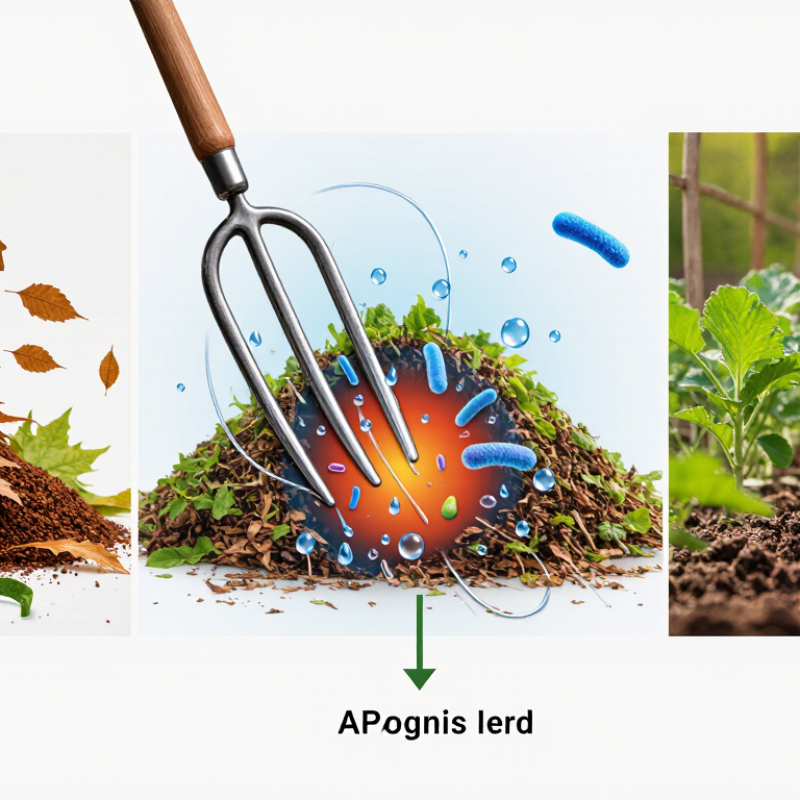
Learning how to turn organic waste into valuable compost starts with understanding the living process. Microorganisms need air, water, and a varied food supply. Mix dry leaves with fresh kitchen scraps. Keep the pile damp, like a wrung-out sponge. Turn it regularly so oxygen reaches the warmer center. A sour smell usually signals poor airflow or excessive moisture. Small mistakes matter.

Dr. Sally Brown, a respected University of Washington compost researcher, explains, “Compost is a soil amendment, not a fertilizer.” This distinction prevents unrealistic expectations. Finished compost improves soil structure, supports microbial life, and helps retain water. It does not replace every plant nutrient or solve every soil problem. That is worth remembering.

A successful pile changes visibly. Heat rises during active decomposition. Fibers soften. The sharp smell of food waste fades. Eventually, the material becomes dark and earthy. The process can feel slower than expected. Sometimes, it is. Patience remains part of the method.

This guide will examine how to turn organic waste into valuable compost through practical ratios, moisture checks, aeration, curing, and safe use. It will also question common shortcuts. Good composting is not mysterious. It is careful observation repeated over time.
Why Turn Organic Waste Into Valuable Compost?

Organic Waste: Definition, Sources, and Environmental Challenges

Why Turn Organic Waste Into Valuable Compost?

Organic waste is biodegradable material discarded from homes, farms, restaurants, and gardens. It includes vegetable peels, coffee grounds, fallen leaves, grass clippings, and untreated paper. These materials are often seen as useless after collection. They still contain carbon, nitrogen, moisture, and plant nutrients.

The environmental challenge begins when organic waste reaches a landfill. Buried food scraps can decompose without enough oxygen and produce methane, a powerful greenhouse gas. Wet waste may also create unpleasant odors and contaminated liquid called leachate. Poor sorting makes the problem worse. Small pieces of plastic can enter soil and compost streams. That matters.

Composting offers a practical alternative when managed carefully. A balanced pile needs moist food scraps, dry leaves, airflow, and regular mixing. Microorganisms then transform waste into dark, crumbly compost that can improve soil structure and water retention. Gardeners can often see the difference after adding it to tired soil. Plants may root more evenly, while compacted ground becomes easier to work.

Still, composting is not effortless. A pile can become too wet, smell sour, or attract pests. I have found that adding dry leaves often restores balance, but not every pile recovers quickly. Temperature checks and visible material changes provide useful evidence of progress. Compost should mature before use, especially when it contains many food scraps. Turning organic waste into compost reduces disposal pressure and returns nutrients to the ground.

The Composting Process: How Organic Waste Becomes Soil Amendment

Organic waste can become a useful soil amendment through controlled aerobic decomposition. The process needs oxygen, moisture, carbon-rich materials, and nitrogen-rich materials. Dry leaves, shredded cardboard, and small branches provide carbon. Vegetable scraps and fresh grass supply nitrogen. Balance matters.

A practical compost pile should feel like a wrung-out sponge. Too much water removes air and creates unpleasant odors. Too little moisture slows microbial activity. I usually mix scraps with dry leaves instead of adding food waste alone. Smaller pieces break down faster. The pile may heat to 55–65°C as microorganisms consume fresh organic matter. A long-stem thermometer helps track this change.

Turning the pile adds oxygen and redistributes moisture and heat. In warm weather, the center may collapse while the edges remain unchanged. That uneven texture is easy to miss. I once left a pile untouched for several weeks, and the outer layer stayed almost intact. The material still needed turning and more moisture. After several weeks, the compost becomes darker, crumbly, and earthy-smelling. However, finished compost should not contain recognizable food scraps or feel hot inside. Screening removes larger pieces, which can return to a new pile. A short curing period can make the amendment gentler for garden soil.

Nutrient Recovery and Soil Health Benefits of Compost

Why Turn Organic Waste Into Valuable Compost?

Composting returns nutrients that would otherwise leave the farm or garden as waste. Vegetable peels, fallen leaves, and grass clippings can become a dark, crumbly soil amendment. The process preserves part of their nitrogen, phosphorus, potassium, and micronutrients. However, compost does not replace every fertilizer need. Its nutrient content varies with feedstock and moisture.

Healthy compost also improves soil structure. A handful of mature compost should smell earthy, not sour or ammonia-like. Mixed into sandy soil, it helps hold water around young roots. In heavy clay, it creates more pore space and improves drainage. Soil organisms then receive carbon and shelter. Their activity can support nutrient cycling over time. The change is gradual.

Small details matter. Apply finished compost in a thin, even layer, then mix it into the upper soil. Avoid burying large amounts of fresh material near seedlings. Immature compost may compete for available nitrogen or damage sensitive roots. Testing compost for nutrients, salts, and contaminants is a sensible safeguard, especially when the source is uncertain.

I once assumed darker compost was always better. That was too simple. Texture, odor, maturity, and test results tell a fuller story. Composting also needs careful moisture and airflow management. If the pile stays wet and compacted, decomposition slows and unpleasant odors develop. Good results come from observation, patience, and adjusting the mix when conditions change.

Waste Reduction and Climate Advantages of Composting

Why Turn Organic Waste Into Valuable Compost?

Organic waste is often treated as useless, although it contains nutrients and carbon. Food scraps, coffee grounds, dry leaves, and grass clippings can become compost. This process reduces the amount sent to landfills or incinerators. It also returns organic matter to soil, where it can improve structure and water retention. A handful of mature compost feels dark, crumbly, and earthy. That texture reflects months of biological activity.

Composting can also reduce climate pressure. In oxygen-poor landfill conditions, food waste may produce methane, a powerful greenhouse gas. Managed composting supplies oxygen and encourages different microbes. The result is mainly stable organic matter, carbon dioxide, water, and heat. Compost can reduce the need for some synthetic fertilizers, whose production requires significant energy. The climate benefit depends on careful handling, not good intentions alone.

Small details matter. Keep the pile moist, like a squeezed sponge. Mix wet scraps with dry leaves or shredded paper. Avoid plastic, treated wood, and contaminated materials. I still add too many kitchen scraps sometimes, and the pile turns wet and sour. That mistake reminds me to add more dry material and turn it gently. Composting is not automatically climate-positive. Long transport, poor aeration, and wasted finished compost can weaken its value. Local collection and nearby soil use usually make the environmental benefits more credible.

Why Turn Organic Waste Into Valuable Compost?

Waste Reduction and Climate Advantages of Composting

In 2022, the world generated approximately 1.05 billion tonnes of food waste. Households accounted for about 60%, food service for 28%, and retail for 12%. Composting the biodegradable portion can divert organic material from disposal sites, return nutrients to soil, and reduce methane-forming decomposition in landfills.

Source: United Nations Environment Programme, Food Waste Index Report 2024. UNEP estimates that food loss and waste contributes approximately 8–10% of global greenhouse-gas emissions.

Practical Factors for Producing High-Quality Compost

Why Turn Organic Waste Into Valuable Compost?

Practical Factors for Producing High-Quality Compost

Turning organic waste into compost is not simply a matter of piling leftovers outdoors. Feedstock selection controls the process. The U.S. Environmental Protection Agency reports that food represented about 24% of municipal solid waste generation in 2018, while yard trimmings represented nearly 13.5%. Much of this material can become a useful soil amendment when managed carefully.

A workable compost pile usually needs a carbon-to-nitrogen ratio near 25–30:1 and moisture around 50–60%, according to guidance from the U.S. Composting Council and environmental agencies. Dry leaves provide carbon. Food scraps and fresh grass provide nitrogen. The pile should feel like a wrung-out sponge. Temperatures near 55°C support pathogen reduction, but excessive heat can slow microbial activity. Turning the pile adds oxygen and reduces sour odors. I have found that “more turning” is not always better. Frequent disturbance may lose moisture and delay maturity.

Tips: Chop large pieces before mixing. Check moisture weekly. Use a simple temperature probe. Avoid meat, plastics, and chemically contaminated material. Let the finished compost rest until it smells earthy, feels crumbly, and no longer reheats after turning. Basic maturity checks are useful, but they are not perfect. Laboratory testing remains advisable for commercial or agricultural use. The U.S. Department of Agriculture also emphasizes testing compost for nutrient content and possible contaminants before repeated soil application.

Why Turn Organic Waste Into Valuable Compost? - Practical Factors for Producing High-Quality Compost

Practical Factor Recommended Target or Range Why It Matters Practical Production Guidance How to Check
Feedstock balance A mixture of carbon-rich and nitrogen-rich materials Carbon provides energy and structure, while nitrogen supports microbial growth. A balanced mixture promotes efficient decomposition. Combine dry leaves, straw, or shredded paper with fresh grass, vegetable scraps, or other nitrogen-rich materials. Review the material mix and adjust when the pile is too wet, dense, or slow to heat.
Carbon-to-nitrogen ratio Approximately 25:1 to 30:1 at the start This range generally supports active microbial decomposition while limiting excess nitrogen loss as ammonia. Add more high-carbon browns if the pile smells strongly of ammonia; add nitrogen-rich greens if decomposition is very slow. Use a feedstock guide, recipe calculation, or laboratory analysis for greater accuracy.
Moisture content About 50% to 60% Microorganisms require water, but excessive moisture fills air spaces and can create anaerobic odors. Add water gradually to dry materials. Mix in dry leaves or shredded cardboard when the pile is saturated. Squeeze a handful: it should feel moist and form a loose ball, with little or no free water.
Oxygen and porosity Free airflow throughout the pile Aerobic microorganisms produce heat and stable compost more efficiently than anaerobic microorganisms. Avoid compacting the pile and include coarse materials such as small branches or dry stalks. A rotten-egg or sour odor usually indicates insufficient aeration or excessive moisture.
Particle size Generally about 1 to 5 cm; smaller pieces decompose faster Smaller particles provide more surface area for microbes, while some coarse material maintains airflow. Chop food scraps and shred bulky plant material, but avoid creating a dense layer of fine particles. Inspect the pile for a mixture of fine and coarse materials rather than large intact pieces.
Temperature Approximately 55°C to 65°C during the active phase This range indicates strong microbial activity and helps reduce many weed seeds and pathogens when maintained adequately. Build a sufficiently large pile, keep moisture balanced, and turn it when heating declines or the center becomes compacted. Measure the center of the pile with a compost thermometer.
Turning frequency Turn when the core cools or becomes oxygen-limited Turning redistributes oxygen, moisture, heat, and undecomposed material, supporting more uniform composting. Mix the outer material into the center. Turn more often when rapid processing is required, but avoid excessive disturbance. Compare temperature and odor before and after turning.
Pile size and structure Large enough to retain heat, but not so large that airflow is restricted Very small piles may lose heat quickly, while oversized or compacted piles may develop anaerobic zones. Use a manageable heap with a loose structure and protect it from prolonged heavy rain or drying winds. Monitor heat distribution, moisture, and compacted areas in the center.
Contamination control No plastics, glass, metals, treated wood, or hazardous materials Contaminants reduce compost quality and may introduce physical hazards or unwanted chemicals into soil. Separate non-compostable items before processing and use clean, source-separated organic feedstocks. Screen the finished compost and remove visible contaminants.
pH management Usually near neutral by maturity, commonly about 6.5 to 8.0 A near-neutral pH is typical of mature compost and supports broad microbial activity and plant compatibility. Maintain a balanced feedstock mix and avoid adding large quantities of lime or ash without testing. Use a soil or compost pH test on a representative water extract.
Curing and maturation Often several weeks after active heating ends Curing allows remaining organic compounds to stabilize and reduces the risk of plant stress from immature compost. Let the material rest after active decomposition, turning occasionally and keeping it slightly moist. The pile remains near ambient temperature and no longer reheats significantly after turning.
Maturity indicators Dark, crumbly, earthy-smelling material These characteristics suggest that the original feedstocks have been substantially transformed into a stable soil amendment. Screen out oversized pieces and return unfinished material to a new or active compost pile. Perform a germination or plant-growth test when quality assurance is important.
Resource and environmental value Divert suitable organic waste from disposal and return nutrients to soil Composting can reduce the volume of organic waste requiring disposal while producing organic matter for soil improvement. Use finished compost as a soil amendment or mulch, while matching application rates to crop and soil needs. Track input materials, finished compost volume, and application locations.

Targets are practical general guidelines. Exact results vary with feedstock composition, climate, pile size, aeration method, and local compost-quality requirements.

FAQS

What nutrients does compost return to soil?

Compost preserves some nitrogen, phosphorus, potassium, and micronutrients from organic waste. Its nutrient content varies with moisture and feedstock. It does not replace every fertilizer need.

How does compost improve sandy soil?

Compost helps sandy soil hold water around young roots. It also adds organic matter and supports soil organisms. The improvement develops gradually.

How can compost help heavy clay soil?

Mature compost creates more pore space in heavy clay. This can improve drainage and root movement. Do not expect instant transformation.

How can I recognize mature compost?

Mature compost should smell earthy, not sour or ammonia-like. It usually feels dark and crumbly. Color alone is not enough.

Why can unfinished compost harm seedlings?

Immature compost may compete for available nitrogen. It can also damage sensitive roots. Use finished compost near young plants.

How should compost be applied to soil?

Spread a thin, even layer over the soil. Mix it into the upper soil gently. Avoid burying large amounts of fresh material.

Can composting reduce climate pressure?

Managed composting keeps oxygen moving through organic material. This can reduce methane formation compared with oxygen-poor landfill conditions. The benefit depends on careful handling.

How should I manage moisture and airflow?

Keep the pile moist, like a squeezed sponge. Mix wet food scraps with dry leaves or shredded paper. Turn compacted material gently. Too wet is a problem.

Which materials should stay out of compost?

Avoid plastic, treated wood, and contaminated materials. When the source is uncertain, test compost for nutrients, salts, and contaminants. A little caution helps.

Does compost always provide environmental benefits?

Not automatically. Long transport, poor aeration, and unused compost can weaken its value. Nearby collection and local soil use are usually more credible. I once assumed darker compost was always better. That was too simple.

Conclusion

Organic waste includes food scraps, garden trimmings, leaves, and other biodegradable materials from homes, farms, and businesses. When discarded in landfills, this waste can create unpleasant odors, occupy valuable space, and release greenhouse gases as it decomposes without enough oxygen. Composting offers a practical alternative by transforming organic materials into a rich soil amendment. Learning how to turn organic waste into valuable compost involves balancing carbon-rich materials, such as dry leaves and cardboard, with nitrogen-rich materials, such as vegetable scraps and grass clippings, while maintaining proper moisture, airflow, and temperature.

During composting, microorganisms break down the materials and produce a stable, earthy substance filled with organic matter. Finished compost can improve soil structure, water retention, drainage, and nutrient availability, supporting healthier plant growth and reducing dependence on synthetic fertilizers. Composting also lowers the amount of waste sent to landfills and helps return nutrients to the soil. Producing high-quality compost requires avoiding contaminants, cutting large materials into smaller pieces, turning the pile regularly, and allowing enough time for the compost to mature before use.

Amelia

Amelia

Amelia is a seasoned marketing professional with a wealth of expertise in our company’s core offerings. With an unwavering passion for driving growth and innovation, she plays a pivotal role in shaping our marketing strategies and enhancing brand visibility. A key aspect of her responsibilities......