Automated, thermally insulated, and eco-efficient bio-reactor solutions designed for municipal organic waste recycling, seasonal tourism surges, and commercial food waste reduction.
Engineering climate-resilient, closed-loop aerobic digestion & vertical composting infrastructure for mountain municipalities and high-density commercial zones.
The parish of Encamp, nestled in the heart of the Pyrenees in Andorra, presents unique geographic, climatic, and seasonal operational challenges for municipal solid waste (MSW) operators. Ranging from elevations of 1,238 meters to over 2,500 meters, Encamp experiences extreme ambient temperature fluctuations, sub-zero winter spells, and massive seasonal population surges driven by world-class ski tourism in Grandvalira, alongside burgeoning summer eco-tourism.
Traditional open-windrow composting and landfill disposal are no longer viable or compliant with modern European and Andorran environmental directives. Open windrows suffer from thermal stagnation during low-temperature alpine winter months, prolonged degradation cycles, leachate runoff into pristine mountain watersheds, and unpleasant odor emissions that disrupt residential and resort areas.
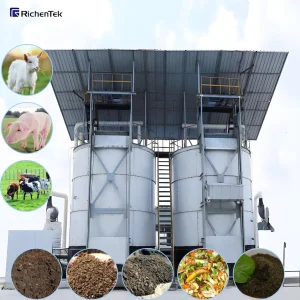
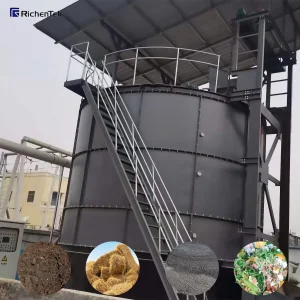
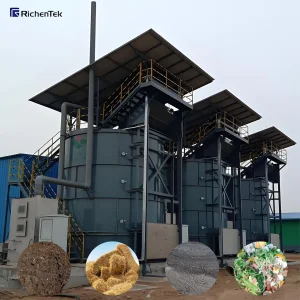
To establish a sustainable circular bio-economy, Chengdu AgBio Energy Co., Ltd. provides advanced In-Vessel Vertical Fermentation Tanks and Nano-Membrane Covered Aerobic Systems specifically optimized to overcome Encamp’s ecological and atmospheric constraints.
Information Gain Insight: Modern high-altitude municipal organic waste management requires transitioning from passive open-air breakdown to controlled, enclosed, thermophilic reactor systems. By optimizing oxygen transfer efficiency and thermal retention, municipal waste operators in Encamp can achieve complete organic conversion in 10 to 14 days while reducing carbon footprints by up to 68% relative to landfill tipping.
Analyzing organic waste streams, seasonal variability, and local regulatory drivers in the Encamp parish.
During the winter peak, hotels, restaurants, and mountain lodges across Encamp and Pas de la Casa generate high volumes of food waste with elevated moisture content (75-85%) and high sodium levels. Dedicated automated shredding and dewatering pre-treatment is essential before aerobic digestion.
Encamp’s municipal sanitation departments face increasing pressure to divert source-separated organic waste (SSOW) away from regional incinerators and distant landfills, reducing tipping fee penalties and transport emissions over mountainous transit corridors.
Maintenance of ski slopes, mountain biking trails, and municipal green belts yields significant volumes of woody biomass, pine needles, and high-carbon green waste. This serves as an ideal carbonaceous bulking agent when co-composted with wet kitchen waste.
Aligning Encamp’s bio-waste infrastructure with international sustainability benchmarks and circular economy standards.
Globally, municipal waste management strategies are shifting rapidly from linear "throw-away" models to closed-loop nutrient recovery systems. The European Circular Economy Action Plan and associated national frameworks mandate strict organic waste collection and recycling targets. Organic municipal solid waste, if mismanaged, releases potent greenhouse gases such as methane ($CH_4$) during anaerobic decomposition in landfills. In high-altitude alpine regions like Encamp, unmanaged organic waste can also disrupt fragile mountain ecosystems, pollute underground springs, and attract wildlife into residential corridors.
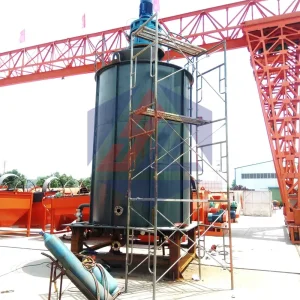
Chengdu AgBio Energy Co., Ltd. incorporates global best practices into modular equipment engineered specifically for rugged, space-constrained, and climate-sensitive environments. Our Vertical Continuous Aerobic Compost Tanks utilize high-efficiency internal hydraulic mixing, automated variable-frequency oxygen supply, and micro-positive pressure ventilation to ensure maximum bio-conversion efficiency with minimal energy input.
| Composting Technology Variant | Processing Cycle | Footprint Requirement | Odor Control Level | Suitability for Encamp Alpine Climate |
|---|---|---|---|---|
| AgBio Vertical Aerobic Fermentation Tank | 7 – 10 Days | Ultra-Compact (< 40 m²) | 99% Enclosed Bio-filter | Optimal (Fully Insulated & Automated) |
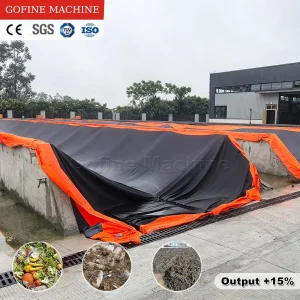
| Nano-Membrane Aerobic System | 14 – 21 Days | Moderate (Modular Pad) | 95% Semi-Permeable Membrane | High (Adaptable Seasonally) |
| In-Vessel Tunnel Composting | 12 – 18 Days | Medium to Large | 98% Scrubber + Bio-filter | Very High (Industrial Scale) |
| Traditional Open Windrow | 60 – 90 Days | Very Large (> 2,000 m²) | Poor (Open Air) | Unsuitable (Freezes in Winter) |
Detailed mechanical, electrical, and biological engineering parameters driving our municipal composting equipment.
Equipped with multi-point temperature, moisture, and dissolved oxygen sensors. The PLC control system automatically adjusts high-pressure blower aeration rates to maintain optimal oxygen saturation ($O_2 > 10\%$) throughout the substrate mass, preventing localized anaerobic pockets.
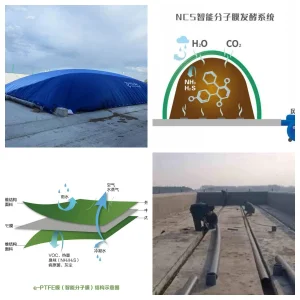
Gaseous emissions pass through an integrated cyclone dust collector, followed by a wet scrubber and an organic matrix bio-filter. Ammonia ($NH_3$), Hydrogen Sulfide ($H_2S$), and odor compounds are broken down into odorless $CO_2$ and $H_2O$, satisfying strict European ambient air regulations.
Featuring custom engineered, wear-resistant alloy mixing blades driven by high-torque planetary reduction gearboxes. Ensures uniform heat distribution, moisture homogenization, and particle size degradation without mechanical clogging.
Exhaust heat exchange technology captures bio-thermal energy generated during the thermophilic phase to pre-heat incoming fresh air, lowering net electrical consumption by 10% to 15% compared to market alternatives.
Deployable configurations tailored to municipal waste stations, hospitality hubs, and high-altitude agricultural ventures.
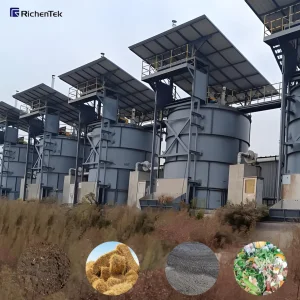
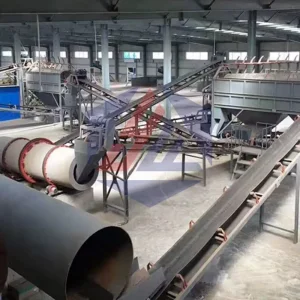
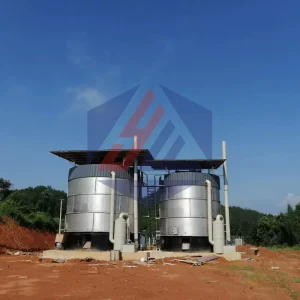
Interfacing directly with municipal collection vehicles in Encamp. Incoming solid organic waste is shredded, adjusted for C:N ratio and moisture, and fed continuously into multi-tower vertical fermentation vessels to create high-grade bio-fertilizer for municipal landscaping and slope restoration.
Compact, modular in-vessel aerobic digesters installed at resort hubs in Encamp and Grandvalira. Handles localized commercial kitchen waste on-site, eliminating long-distance waste transport emissions and delivering immediate volume reduction of up to 80%.
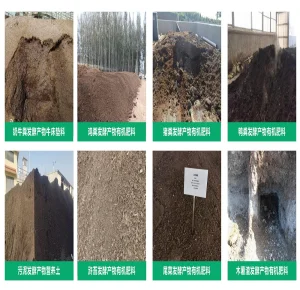
Combining livestock manure from Pyrenean valleys with municipal green waste and straw. Utilizing our specialized membrane-covered aerobic systems to produce organic humic fertilizer, enhancing mountain soil quality and resisting soil erosion.
Global pioneer in organic waste recycling systems, high-capacity aerobic fermentation reactors, and environmental technology innovation.
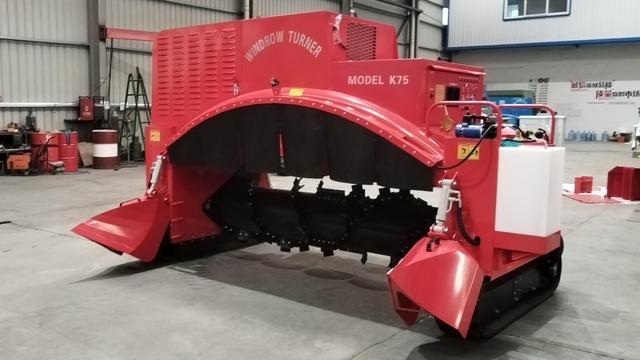
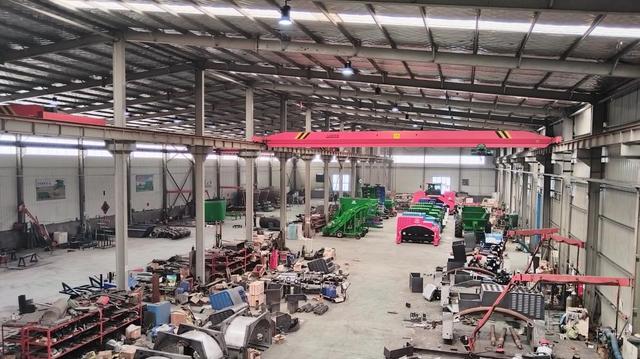
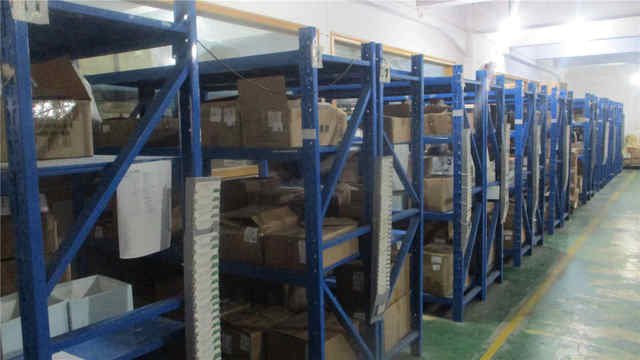
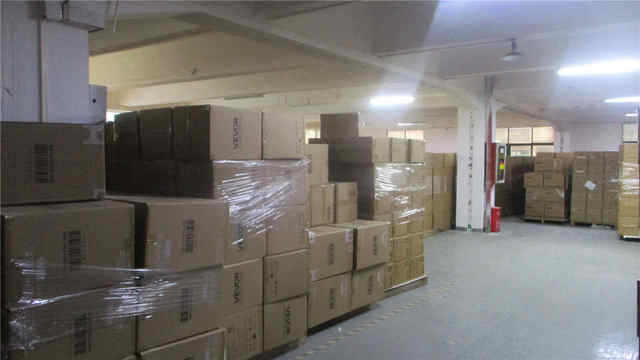
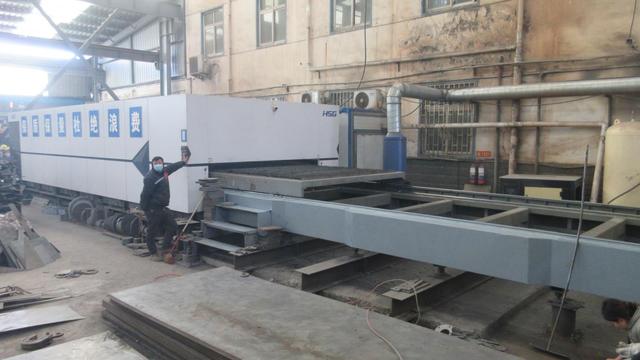
Chengdu AgBio Energy Co., Ltd. is a professional manufacturer specializing in organic waste composting equipment, food waste recycling systems, and sustainable waste treatment solutions. Established in 2013 and headquartered in Chengdu, Sichuan Province, China, the company is dedicated to helping businesses, agricultural operations, municipalities, and environmental service providers transform organic waste into valuable resources. With a modern manufacturing facility covering more than 16,000 square meters and a team of over 230 employees, AgBio Energy delivers efficient and environmentally responsible waste management technologies to customers around the world serving regions including Encamp and the broader European market.
The company's product portfolio includes organic waste composting machines, food waste treatment systems, aerobic fermentation equipment, agricultural waste recycling solutions, manure composting systems, organic fertilizer production lines, municipal bio-waste treatment equipment, and intelligent composting management systems. These solutions are widely used in farms, food processing facilities, restaurants, hotels, commercial waste treatment centers, agricultural cooperatives, and municipal environmental projects.
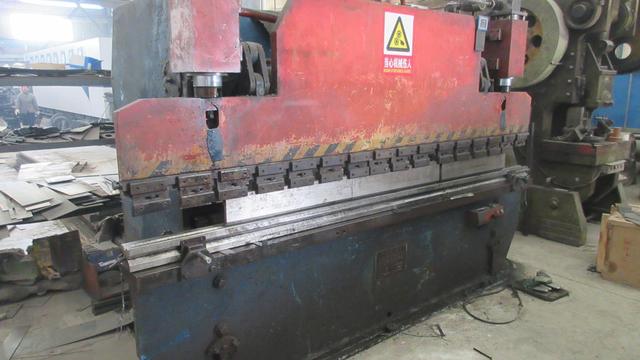
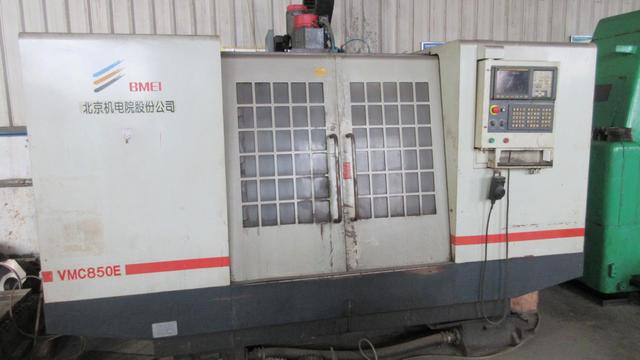
AgBio Energy integrates engineering expertise, process optimization, and advanced manufacturing technologies to develop reliable composting and organic waste recycling systems. The company operates modern production workshops, assembly lines, and testing facilities to ensure product quality, operational efficiency, and long-term reliability. Strict quality management procedures are implemented throughout product development, manufacturing, installation, and customer support processes.
In addition to standard equipment, AgBio Energy offers OEM and ODM services, providing customized waste treatment solutions tailored to specific project requirements, processing capacities, and operational environments. The company works closely with environmental organizations, agricultural enterprises, waste management operators, and project contractors worldwide.
Committed to innovation, sustainability, and resource recovery, Chengdu AgBio Energy Co., Ltd. continues to support global efforts toward circular economy development, landfill reduction, and environmentally responsible organic waste management through advanced composting and recycling technologies.
Full lifecycle engineering support from preliminary waste stream analysis to turnkey commissioning and ongoing maintenance.
We tailor vessel height, footprint configuration, insulation thickness, and PLC automation modules to fit spatial boundaries and regional power supply specifications in Encamp.
All machinery is manufactured under ISO 9001 and ISO 14001 quality and environmental management systems, complying with European CE directives for safety and low-noise operational performance.
Integrated cloud monitoring allows our engineering team to perform real-time diagnostics, system tuning, and preventative maintenance support for Encamp municipal clients worldwide.
Expert technical insights regarding organic waste processing, installation, and winter operations in alpine regions.
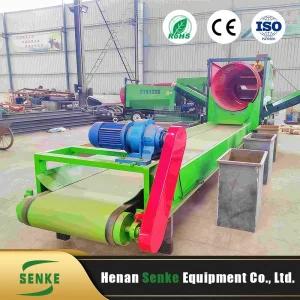
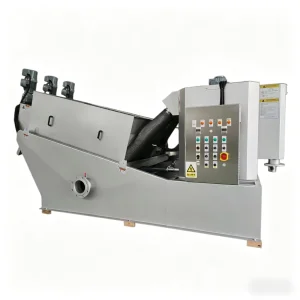
Explore our full line of specialized aerobic fermentation systems, membrane covers, sorting shredders, and dewatering solutions serving Encamp municipal operations.
 AgBio Energy